The Frederick Parker Collection
About the collection and archive
The Frederick Parker Chair Collection and Archive together form one of the most complete records of furniture making in Britain over a period of some 150 years. It is an outstanding resource for students of furniture history and design and may be visited by appointment at London Metropolitan University.
The Collection
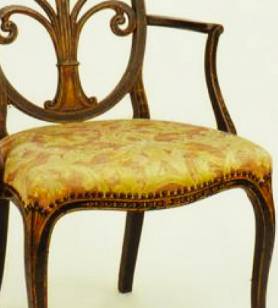
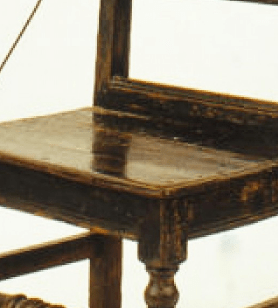
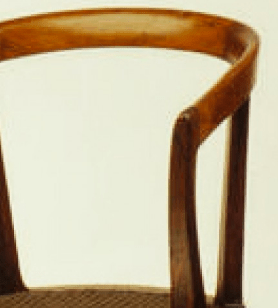
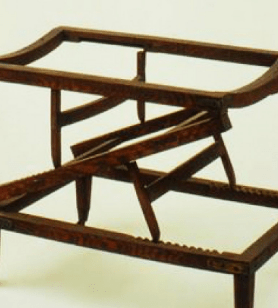
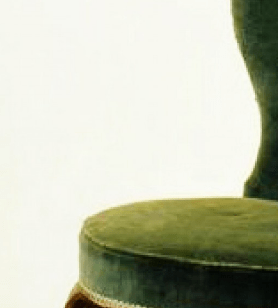
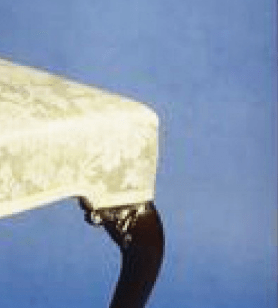
The Frederick Parker chair collection is an outstanding resource for studying British furniture making and design from the 17th century to the present day. It shows a wide variety of materials, forms, decoration and design and illustrates how furniture has evolved over time, with changing ideas about comfort, style and design and the introduction of new materials and technologies. The chair collection offers design students a wonderful resource for sparking ideas and inspiring new forms of seating furniture.
The Frederick Parker and Parker Knoll archive is a wonderful record of 150 years of furniture making, including design, manufacture and retailing. Frederick Parker was established in 1869 and became Parker Knoll in the 1930s, famous for its quality upholstery and tension springing system. Today Parker Knoll continues to be one of Britain’s best known furniture brands. The archive includes details of almost every model made by the company from the 1870s to 2003, with hundreds of design drawings, photographs and related advertising and publicity material.
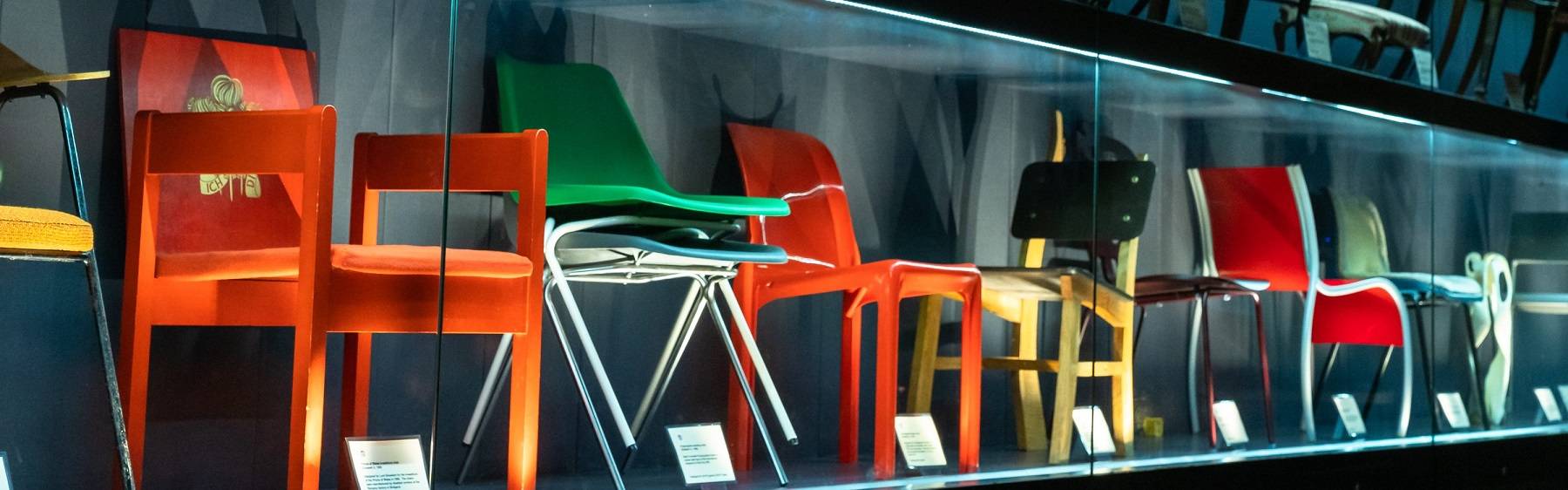
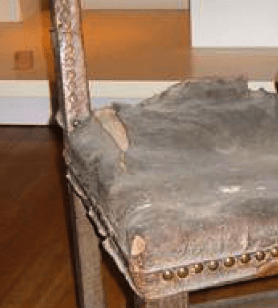
The Frederick Parker chair collection comprises around 200 chairs, almost all made in Britain over the past 350 years. The earliest is an oak framed chair with a leather covered seat and back, made in about 1660 and the latest is the Femur Stool, designed by Assa Ashuach in 2013 based on human bone structure and made as a prototype by 3D printing.
Most of the chair collection was formed in the early decades of the 20th century by Frederick Parker & Sons (see below, A Brief History of Frederick Parker and Parker Knoll). This was a time when antique styles were popular and the Parkers bought antiques to copy or adapt them as reproductions, which were less expensive than antiques and better suited to daily use.
Most of the chairs collected by the Parkers date from between 1660 and 1830, and include Queen Anne, Georgian and Regency styles. Many of the chairs had already been altered or restored, and some were fakes created by the antiques trade to deceive customers, including the Parkers on occasion. Others were in more or less original condition, and a few even retained their original upholstery, and are now especially rare. The Parker collection grew to over 300 chairs, as well as hundreds of chair parts and plaster casts of mouldings and carvings.
In time, as the taste for antique styles declined, the collection became less useful to the Company and in 1974 the chairs were placed on loan to a country house in Somerset, where they were kept safe but largely unseen. In 1997 Parker Knoll decided to sell the collection, prompting members of the Parker family to form a trust, the Frederick Parker Foundation, to save it. The trust acquired around 170 of the most significant chairs to ensure their future use for educational purposes.
In 2002 the collection was placed on long-term loan to the London Metropolitan University, where it was displayed in a purpose–designed gallery accessible for students and open to the public. Further chairs were acquired to fill some gaps in the collection, especially to add examples of British design and/or manufacture from the last 70 years, to keep the collection relevant to design students and to encourage studies of both antique and contemporary styles. The Foundation also acquired the Frederick Parker and Parker Knoll archive, an important record of furniture design, manufacturing and retailing; for more details see below, The Frederick Parker and Parker Knoll Archive, Brief Description.
In 2013 it was agreed the ownership of the collection and archive should be transferred from the Foundation to Worshipful Company of Furniture Makers, the City of London Livery Company and a registered charity, where it would continue to be developed as an educational resource.
The collection and archive remained on loan to the London Metropolitan University until 2026, with much of the chair collection on display. In 2015-17 the archive was catalogued with the help of funding from Parker Knoll and important parts of it are now being scanned and made available online. The chair collection was photographed and catalogued in 2019-20 with funds raised by The Furniture Makers’ Company and is available online.
In 2026 the London Metropolitan University decided to return the chair collection to the Furniture Makers. A selection of 70 chairs, considered to be of the highest interest and reflecting the great diversity in periods, styles and types, are now on long term loan to the London Design and Engineering University Technical College, where they will be displayed and open to visitors by appointment. The rest of the chair collection has been dispersed though public sales and gifts to colleges running furniture and upholstery courses. The entire collection of 200 chairs remains in the online catalogue as a valuable and unique resource.
The Frederick Parker and Parker Knoll Archive

The Frederick Parker and Parker Knoll Archive is a unique record of a British furniture manufacturing company which has been trading for over 150 years, from 1869 to the present. There are over 600 boxes of material, including business and financial records, photographs, advertising material, designs, fabric samples, and reference books.
Details of almost every model of furniture made by the company from the 1870s are included. Plans, sketches, catalogues, promotional material, photographs and film make this a comprehensive record of design, production and marketing over more than a century.
The archive is fully catalogued, accessible online and available for study in person at the London Metropolitan University’s Special Collections facility in east London. More information is available here.
The Furniture Makers is keen to ensure the Frederick Parker collection and archive are used by pupils, students, historians and researchers. We encourage enquiries and visits and regularly arrange for a selection of chairs to be toured to colleges where they can be studied at first hand, with an introductory lecture from one of our experts. Our aim is to inspire the next generation of makers, designers, restorers, curators and historians.
For further details, please contact The Furniture Makers’ Company.
A Brief History of Frederick Parker and Parker Knoll

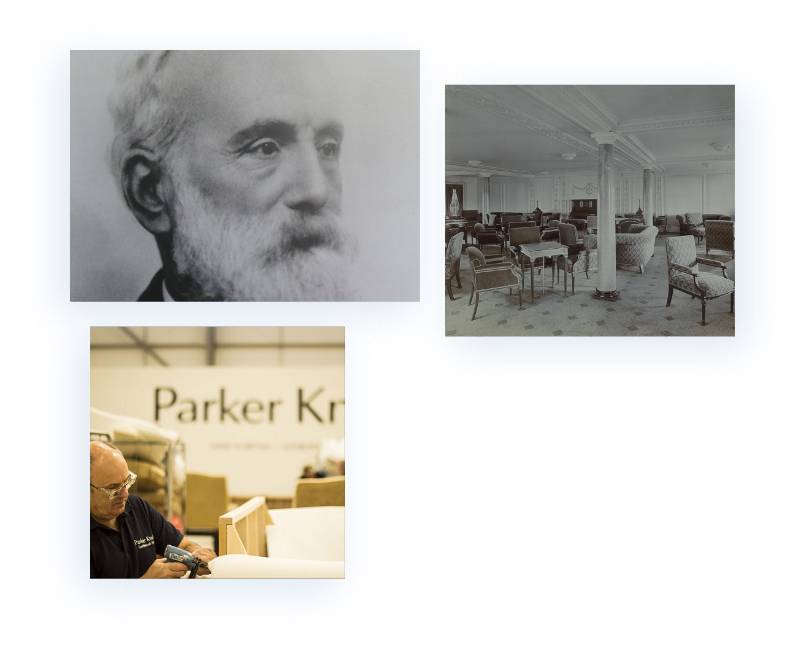
Frederick Parker (1845-1927) was the founder of a successful furniture company, starting in east London in 1869 and moving to High Wycombe in 1898. The company is still in business today, over 150 years later, as Parker Knoll.
With his three sons, Harry, William and Thomas, Frederick Parker & Sons established a reputation for quality furniture, especially upholstered chairs and sofas. They sold to the upper end of the domestic market. They also fitted out and furnished government buildings, royal palaces and some of the great Cunard ocean liners of the 1920s and ‘30s. In the 1930s Frederick Parker & Sons formed a partnership with Willi Knoll, a German manufacturer who had developed a new form of tension spring for upholstered chairs and sofas. New models using the tension springs were launched under the brand Parker Knoll and gradually proved popular. The Company changed its name to Parker Knoll in the early 1930s.
During the Second World War furniture production ceased and the firm turned its manufacturing to military equipment and wooden components for Mosquito aircraft. They resumed furniture making after the war, when production was still controlled under the Utility Scheme until 1952. Designs had to be simple and practical, using a minimum of wood and a limited range of fabrics. Parker Knoll’s Utility model fireside armchairs and Queen Anne style, high-back easy chairs proved very popular and many were still in use for decades after the war.
Up to this time the Company had specialised in high-end furniture, but in the 1950s and ‘60s Parker Knoll turned increasingly to the middle market. Production was based in High Wycombe and at a new factory in Chipping Norton. They experimented with new materials such as glass-fibre for seat shells and vacuum-moulded fibre board. In 1966 they introduced the Norton Recliner, technically based on similar chairs in America, but much more refined. The Norton was designed and marketed as a luxury item and became one of their most successful products ever.
Through a combination of reliable quality and innovative design, Parker Knoll grew into a household brand in the decades after the war. In the 1980s it took over a number of other companies, forming the Cornwell Parker Group. It remained a family firm, run by the Parkers and their descendants, until it was bought out by Silentnight in 2000.
Today, as part of Sofa Brands International, Parker Knoll is one of the Britain’s leading furniture manufacturers, still producing quality upholstered furniture, sold both in retail stores across the UK as well as online. Further details of Parker Knoll can be found here.